 plots
plots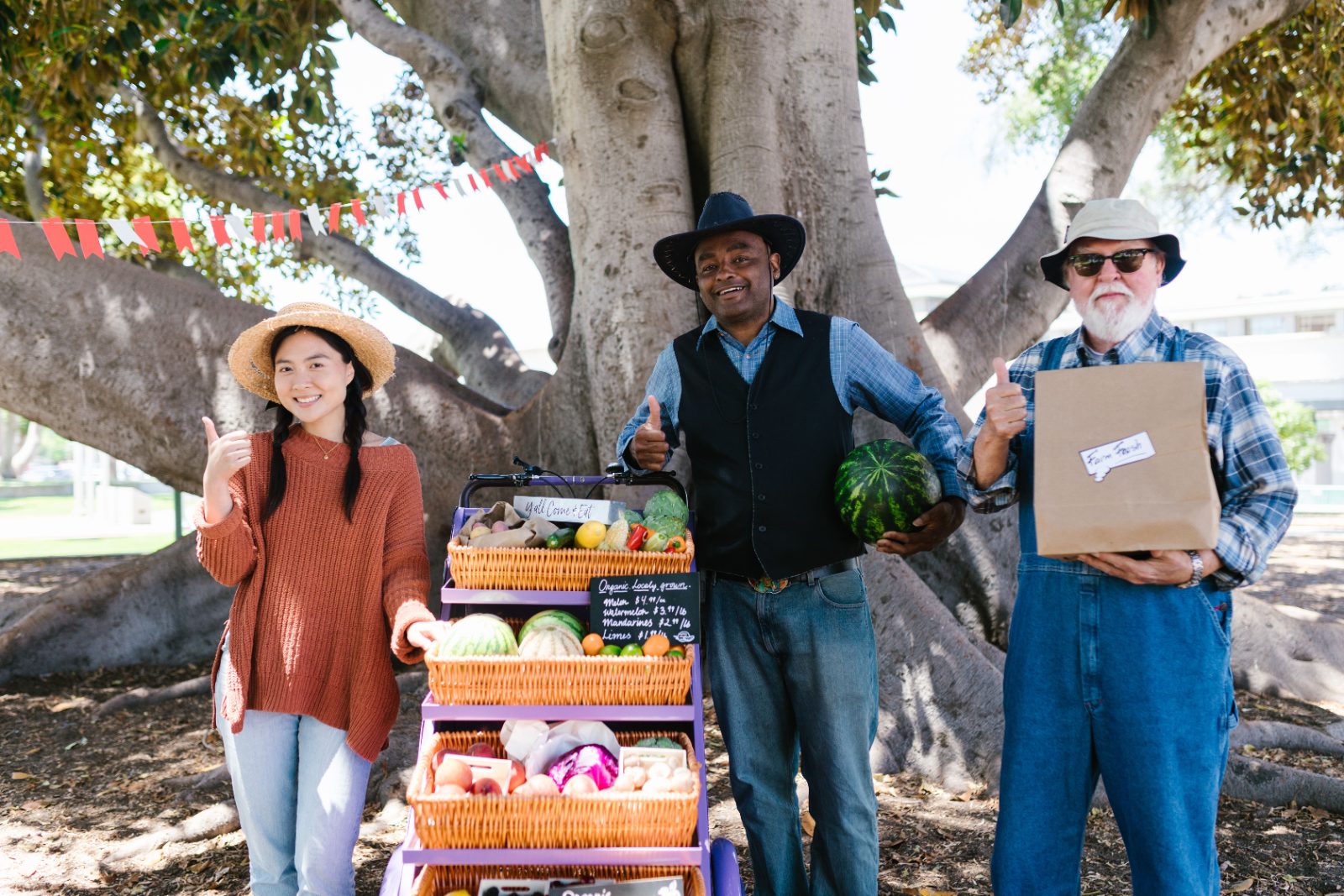
Most growers pick a sales channel by accident. You start with whatever was easiest the first season, a stand at the end of the driveway or a wholesale account a neighbor handed you, and you never really run the numbers on it. But the channel you sell through decides more about your income than almost anything you do in the field. Same tomatoes, three very different paychecks.
Here is the honest breakdown of the three main options, and when each one actually wins.
CSA: the money shows up first
A CSA (community supported agriculture) is a subscription. Members pay up front, usually before the season starts, and you deliver a box of whatever is ready each week.
The magic is the timing of the cash. You get paid in February and March, exactly when you are buying seed and paying for soil and have nothing coming in. That is an interest-free loan from your customers, and it is the single best cash-flow tool a small farm has. You also keep the full retail dollar, no middleman, and you know your sales number for the whole year on day one.
The catch is real, though. A CSA is a promise, and the promise runs both ways. You owe a full box every week whether the hail took your lettuce or not, and a season of thin boxes loses you members you spent years earning. It is also a marketing job that never ends: most CSAs lose 30 to 50 percent of members each year, so you are always recruiting. If you hate selling and love hiding in the field, this is not the low-effort option it looks like.
CSA wins when you have a loyal local following, a diverse crop list that fills a box every week, and enough of a marketing habit to keep the members you sign.
Farm stand: the highest price per pound
Selling direct, a stand, a farmers market booth, an on-farm store, gets you the top dollar. No wholesaler taking their cut, no CSA obligation, just retail price straight into your pocket.
The produce also does not have to be perfect. The lumpy heirloom and the two-pound zucchini both sell at a stand, where a wholesaler would reject them on sight. You set the price. You get instant feedback on what people actually want. And a good stand builds the exact kind of customer relationship that turns into CSA members and repeat business.
The cost is your time. Retail is slow. You might spend six hours at a market to sell what a wholesale buyer would take in one phone call, and that is six hours you are not planting or harvesting. Markets have stall fees, weather can wreck a Saturday, and you carry the risk of what does not sell. The high price per pound is real, but so is the low volume per hour.
Farm stand wins when you have foot traffic or a market nearby, more product than a CSA can absorb, and you would rather earn top dollar on smaller volume than move a lot cheaply.
Wholesale: low price, high volume, no drama
Selling wholesale means moving bulk to a restaurant, grocer, distributor, or food hub. They pay you roughly 40 to 60 percent of retail, sometimes less.
That number scares people off, and I get it. But look at what you are buying with that discount. One order clears a whole crop. No booth, no box-packing, no chasing fifty individual customers. You harvest, you deliver, you invoice, you move on. For a grower who is better in the field than at the market table, that trade is often worth it. Wholesale is also how you sell serious volume of a single crop; nobody moves 400 pounds of carrots through a driveway stand.
The downside is the thin margin and the loss of control. The buyer sets the standards, sometimes the price, and can drop you for a cheaper supplier. Your product has to be graded, consistent, and packed to spec. And one lost account can blow a real hole in your season, so leaning on a single wholesale buyer is a risk.
Wholesale wins when you can grow one or a few crops in volume, hit a consistent quality bar, and you value your time in the field over the retail markup.
Nobody actually picks just one
Here is the part the "versus" framing gets wrong. The strongest small farms run all three, on purpose. The CSA locks in spring cash and a baseline. The farm stand takes the surplus and the ugly-but-good produce at full price. Wholesale clears the gluts, the week 200 pounds of squash come in at once and you cannot possibly sell it by the pound.
Each channel covers a weakness in the others. The mix is the strategy, not a compromise.
How Plots.Farm helps
The reason most growers never run this comparison is that the numbers are a pain to pull together. What did that bed actually yield, what did it sell for, and through which channel? Plots.Farm assigns a value to each crop from your own market prices and tracks what you harvest off each bed, so you can see what a planting is really worth before you decide where to send it. When 200 pounds of squash lands at once, you already know whether it clears best as boxes, at the stand, or wholesale.
If you sell direct, the built-in store and CSA Shares let you take member payments up front and move surplus through the same system, so the cash-flow advantage of a CSA does not need a second app to run. Plan the beds, see the value, pick the channel that pays.
Run the numbers on where your crops go this year instead of selling by habit. The channel is worth as much as the harvest.
Create your farm and see what each bed is really worth before you decide where to sell it.
Pass it to a grower who has been selling wholesale out of habit and never priced out the stand.