 plots
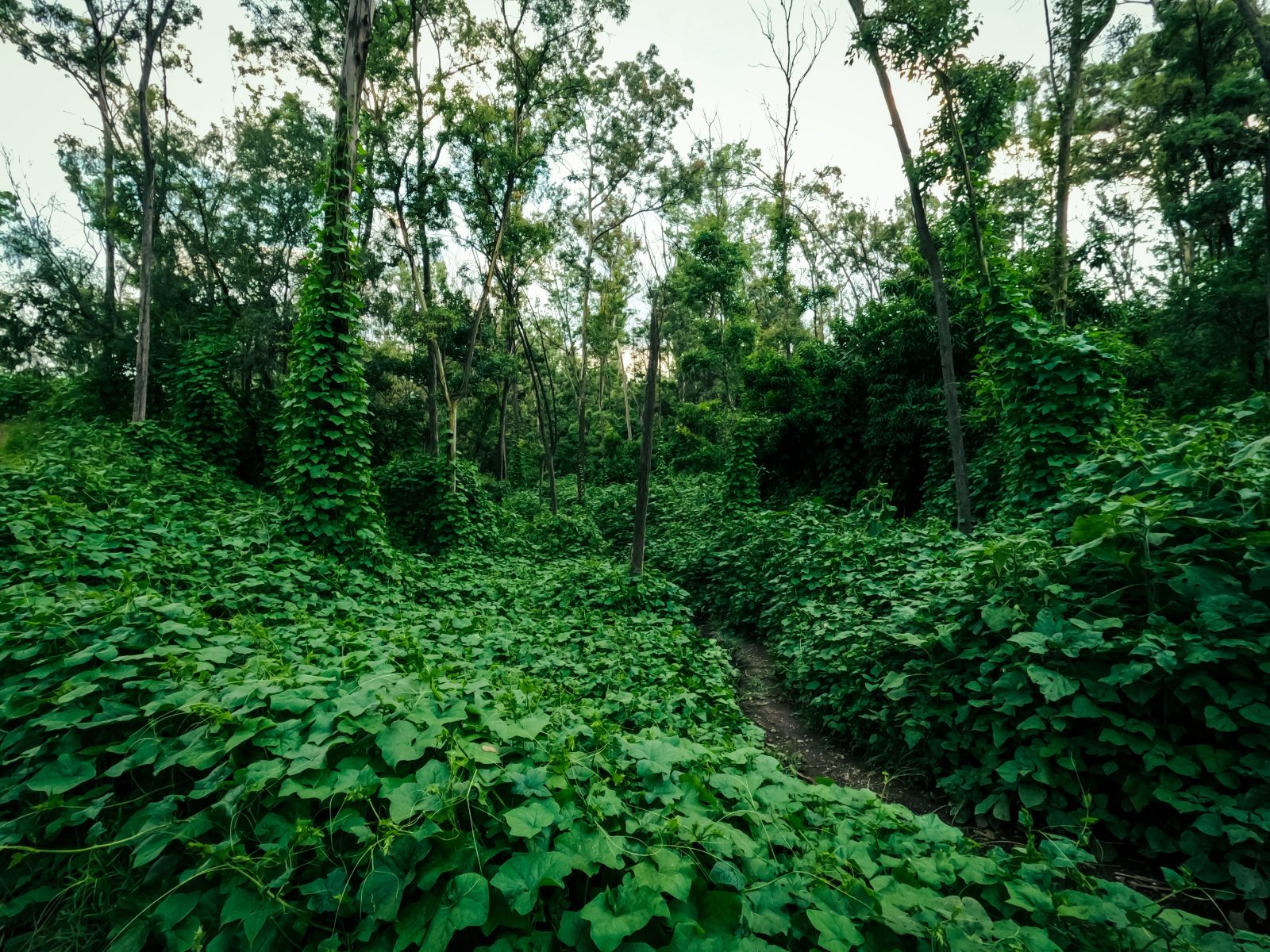
Every farm has an edge that is losing a slow war. It is usually the fence line, the ditch, or the shady corner behind the barn, and it is usually filling up with the same handful of aggressive plants. Mechanical control works on all of them, but only if you are stubborn about it. This is what we have learned pulling the same invaders out of the same ground season after season.
Know the common offenders
Four show up again and again, and it helps to recognize them before they get big.
Mimosa, the silk tree in the genus Albizia, has feathery ferny leaves and pink powder-puff flowers. It seeds heavily, and the seeds stay viable in the soil for years. Princess tree, or Paulownia, grows shockingly fast with huge floppy leaves and purple spring blooms, and a single tree throws millions of tiny wind-carried seeds. English ivy is the evergreen groundcover that never stops; it carpets the soil, smothers everything under it, and climbs trees until it shades out the canopy. Chinese privet is the semi-evergreen shrub that forms dense thickets along fence lines and creek banks, spreading by both seed and root sucker.
What they share is the reason they are a problem: they spread by prolific seed and by root or runner, and they shade out and replace natives fast.
Match the method to the plant
Mechanical control is not one technique; it is a small toolkit, and matching the tool to the size and species saves wasted effort.
Pull seedlings when the soil is wet. This is the single highest-value habit. After a good rain, small mimosa, privet, and princess tree seedlings come up with the roots attached, and a root left in the ground is a plant that comes back. Dry-soil pulling snaps the stem and leaves the root to resprout, so time it to the weather.
For anything past seedling size, a weed wrench earns its keep. The lever action lifts privet and small saplings, crown and all, with far less digging than doing it by hand.
Cut larger stems, then deal with the crown. A stem you simply cut at ground level will resprout, often with more shoots than it had before, so cutting alone makes the problem denser. After you cut, dig or grub out the crown and the main roots. This is the slow, sweaty part, and the part that actually kills the plant.
English ivy gets its own approach. On the ground, cut the mat into strips and roll it back like sod; the roots are shallow and it comes up in sheets. On trees, you do not need to pull the vines off the trunk. Cut them at chest height and again at ankle height; everything above the cut dies back over the following weeks.
It is a multi-season job
Here is the truth that separates the people who clear an area from the people who just tire themselves out: one pass is never enough.
The seed bank and the resprouts mean you go back, and you go back on a schedule. Mimosa and privet seed sits dormant in the soil and germinates in waves for years after the parent is gone. Cut crowns push new shoots. Ivy fragments re-root. A patch you cleared in April will have fresh seedlings by July and again next spring, and if you do not return, you have handed the ground right back.
Priority one is stopping them before they seed. If you can only do one thing in a season, cut or pull the flowering and seed-bearing plants before the seed sets. That does not clear the patch, but it stops it from restocking the seed bank and stops the spread to new ground, which is the difference between a shrinking problem and a growing one.
And replace what you clear. Bare ground does not stay bare; it refills with whatever seeds in first, which is often the same invader or its neighbor. Plant the cleared edge with something you want, natives or a cover, or you are just running a nursery for the next wave.
Honest caveats
Mechanical-only control is real work with real limits, and it is fair to name them.
Cut-stump resprouting is the big one. Many of these plants, privet and mimosa especially, respond to a cut by sending up a flush of new shoots, so cutting without removing the crown can leave you worse off. Root fragments do the same; a piece of privet or ivy root left behind can start a new plant. Wear gloves, both for the physical work and because privet sap and ivy bother a lot of people's skin.
Big trees are a different job. A mature mimosa or a large princess tree near a structure is a chainsaw-and-stump-grinder task, and sometimes a job for someone with the gear and insurance to fell it safely. Do not try to muscle out a trunk you cannot handle.
And mechanical-only is slower than the chemical route. A cut-stump herbicide treatment kills the crown in one pass; digging it out takes longer and takes repeat visits. The trade is time and effort in exchange for keeping herbicide off your ground, which is reasonable for a lot of growers, but it is a trade, not a free lunch.
How Plots.Farm helps
The hard part of a multi-season fight is not the pulling; it is remembering. Which patch did you already hit, when, and did it come back. Plots.Farm's observations let you map where each invasive patch sits and log every removal pass, so the whole campaign becomes a record you can follow instead of a vague sense that "the privet is back over there somewhere."
From there, you can turn recurring removal into scheduled tasks, so the follow-up passes land on your list instead of getting forgotten in the rush of the growing season. The seed bank is going to keep pushing shoots for years; a scheduled return trip is how you outlast it.
Mechanical control works, but only if you go back. Map the patches, cut before they seed, and schedule the follow-up so the next pass does not slip.
Create your farm and start keeping a record of every removal pass.
Pass it to a grower who is losing the fence line to privet.