 plots
plots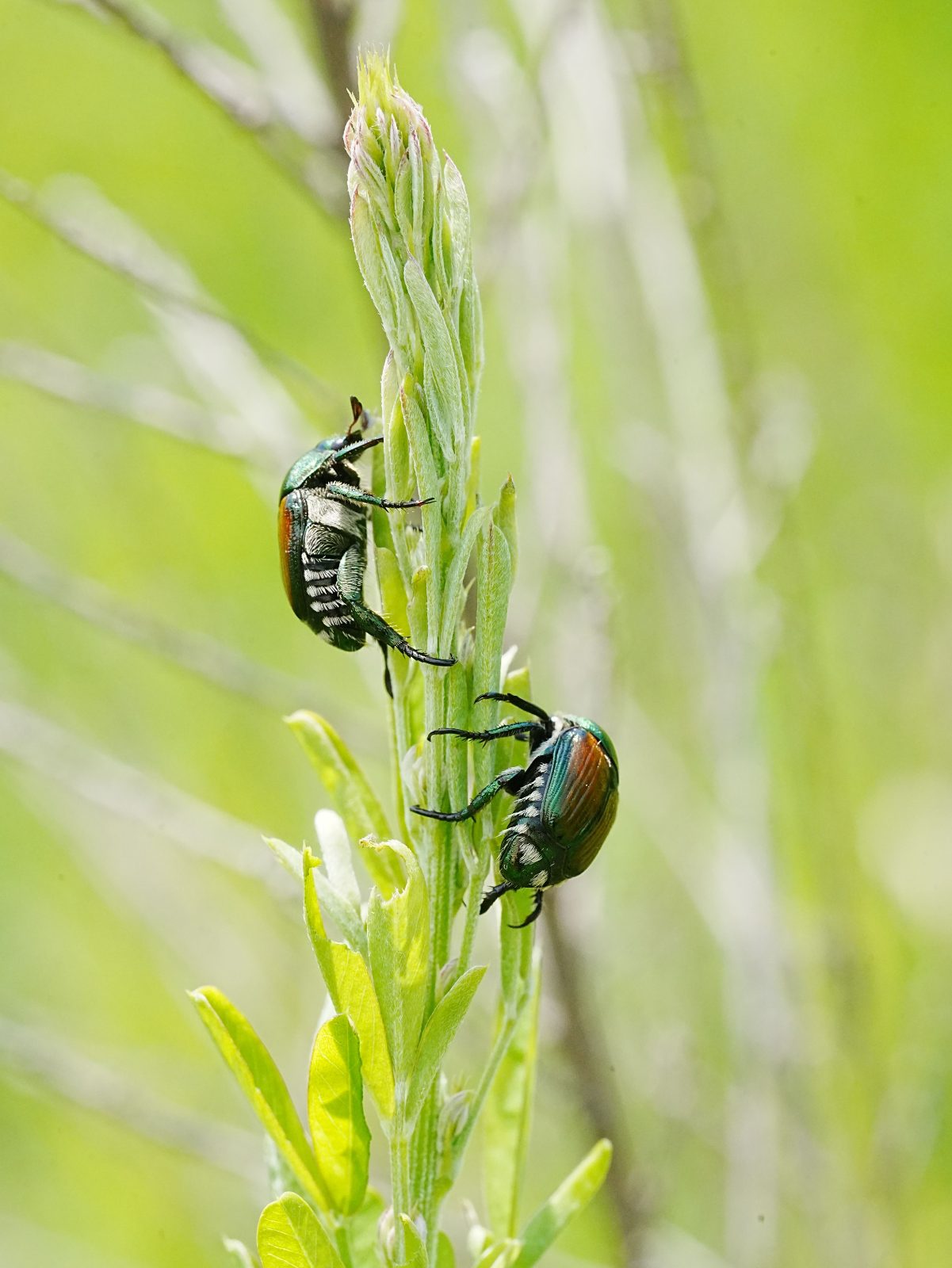
The difference between a manageable Japanese beetle year and a miserable one usually comes down to a few days in early summer. Catch the first handful on your roses or beans and you can stay on top of them. Miss that first wave and let it call in reinforcements, and by mid-July you are staring at skeletonized leaves and wondering where they all came from. Early detection is the whole game, and it starts with knowing what you are actually looking at.
What the damage looks like
Japanese beetles are metallic green with coppery wing covers, roughly the size of a pea, and they do a very specific kind of damage. They chew the soft leaf tissue between the veins and leave the veins behind, so the leaf ends up looking like brown lace. That skeletonized pattern is the giveaway. They are not fussy eaters, either: roses, beans, grapes, basil, raspberries, and dozens of other plants are all on the menu, which is part of why they feel like they are everywhere at once.
They also feed in groups, and that is not an accident. A feeding beetle releases cues that draw in more beetles, so a couple of early arrivals on a rose bush become a clustered mob within days if nothing interrupts them. That group behavior is exactly why the timing of your response matters so much. Hitting the first few is not just about those few; it is about not letting them advertise the buffet to the rest.
The lifecycle tells you when to act
Knowing the calendar helps you stop treating this as a surprise every year. Adults emerge and feed through early to mid summer, which is the window when you see them on your crops. During that window the females drop down into turf and soil to lay eggs. Those eggs hatch into white, C-shaped grubs that live in the soil, feeding on grass roots through late summer and fall, overwinter down deep, and then pupate into next year's adults. The beetles chewing your beans in July and the grubs in your lawn in September are the same problem at two stages.
That two-front nature is useful. You can go at the adults when they are feeding on your crops, and you can go at the grubs in the turf to lower next year's emergence. Neither alone finishes the job, but understanding that the lawn and the rose bush are connected changes how you think about the whole season.
Identify before you spend an afternoon on it
Several beetles look enough like a Japanese beetle to fool a quick glance, and some of them are harmless or even beneficial. There are look-alikes that are the wrong shape or lack the little tufts of white hair along the sides that a true Japanese beetle shows. If you misidentify, you can spend an afternoon hand-picking, or worse spraying, an insect that was never your problem, and you tip your hand to nothing.
So the first move when you spot suspicious skeletonizing is to confirm the culprit, not to react. A clear look at the beetle, ideally a close photo, is worth the two minutes it takes. Getting the identification right before you commit effort is the single cheapest thing you can do, and it is the step most growers skip when they are annoyed and in a hurry.
Then act, in order of what works
Once you have confirmed it, a few methods pull real weight, and one popular one mostly backfires.
Hand-picking is unglamorous and genuinely effective at small scale. Go out in the cool of the morning when the beetles are sluggish, hold a container of soapy water under them, and knock them in; many will drop on their own when disturbed. Doing this daily during the flight keeps a small population from ever reaching the group-feeding tipping point.
Row cover protects your highest-value crops during the weeks the adults are flying. On crops that do not need pollinators at that stage, throwing a lightweight cover over them during peak flight is a clean way to simply take them off the table. Just remember to uncover anything that needs to be pollinated.
For the grubs, beneficial nematodes or milky spore applied to turf reduce the population developing in the soil, which lowers next year's pressure. These are slow, patient tools, not this-week fixes.
The one to skip in most cases is the pheromone lure trap. It works exactly as advertised, which is the problem: it is very good at attracting beetles, and it pulls in far more than it actually catches, so you end up drawing the neighborhood's beetles onto your property and feeding the ones that land short of the bag. Unless you are running a coordinated area-wide program, the traps usually make your yard worse.
The caveats
Be realistic about what success looks like here. Control of Japanese beetles is suppression, not eradication. You are lowering the numbers and the damage to a level you can live with, not clearing them off the map. Grub treatments are slow and can take a season or more to show their effect, so they are an investment in next year rather than a rescue for this week. And you do not farm in a vacuum: a neighbor's untreated lawn a hundred feet away is a grub nursery that keeps feeding the adult population no matter how clean your own turf is. That is not a reason to do nothing; it is a reason to keep expectations realistic and to keep at it every year.
How Plots.Farm helps
Plots.Farm's in-app insect identification lets you photograph the beetle you found and get the likely candidates back, so you can confirm it really is a Japanese beetle and not a harmless look-alike before you spend an afternoon on it, and the app returns suggested resolutions to point you at the right response. Then log it in Pest scouts on the exact bed you found it. As you keep scouting through the flight, the per-bed heatmap shows you where the pressure is building and how fast, so you can time your hand-picking rounds and get row cover onto your key crops on the beat of the actual wave, not on a guess at the calendar. The beetles will still show up. The goal is to see the first ones clearly and move before they finish inviting the rest.
Confirm the beetle before you react, log it on the bed, and let the building heatmap tell you when to hand-pick and cover.
Create your farm and start scouting the flight before it becomes a swarm.
Pass it to a grower whose roses got skeletonized last July.