 plots
plots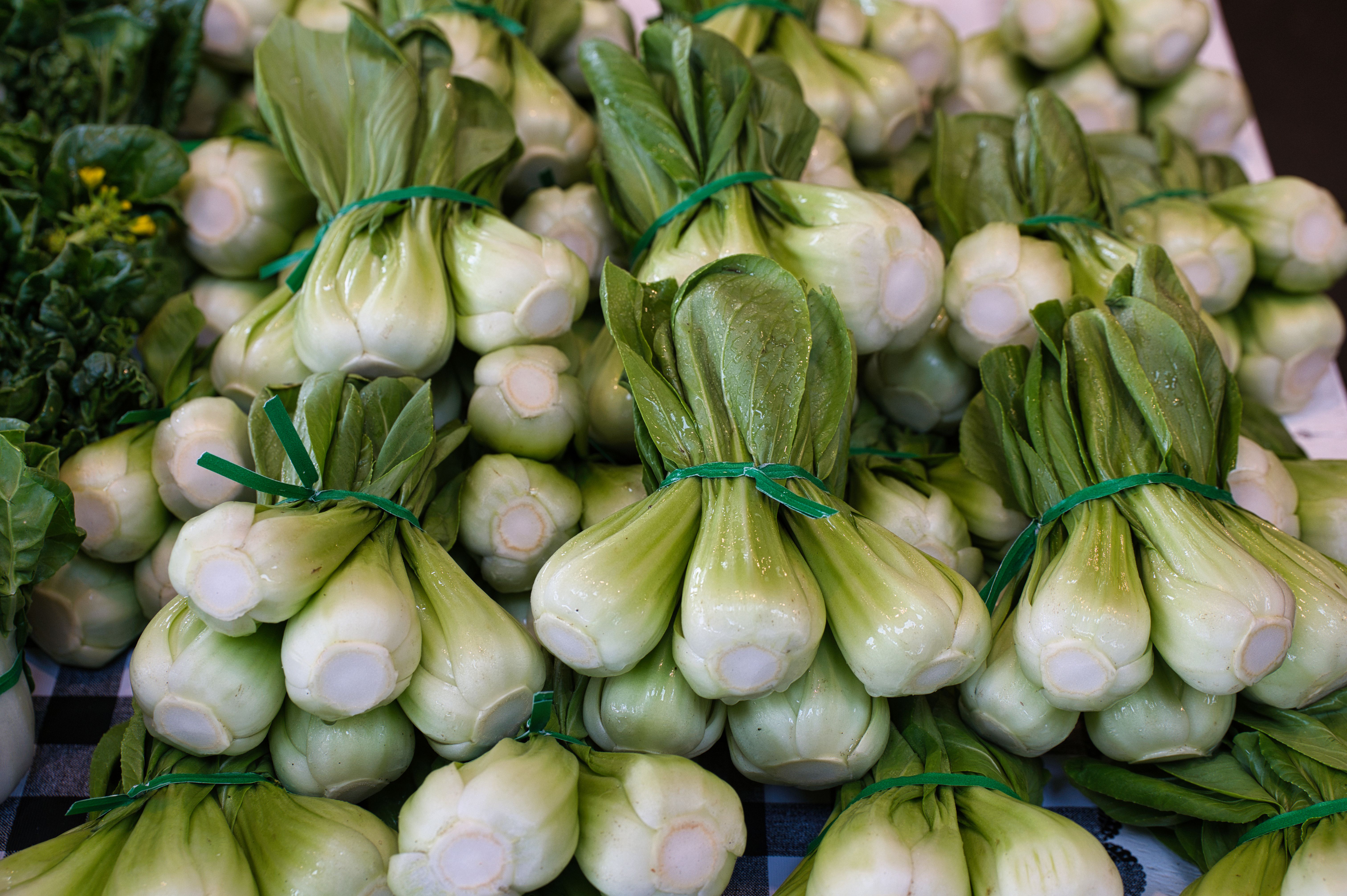
Walk into the Asian grocery near you and look hard at the produce, not as a shopper but as a grower. Most of what you are seeing did not come from anywhere close. The bok choy traveled days on a truck. The yu choy is already yellowing at the cut ends. The bitter melon and long beans came up from Florida or in from overseas, picked early to survive the trip, sold a little tired. There is an opening sitting right there in the cooler, and almost nobody local is filling it.
That is the whole pitch for this niche: real demand, thin local supply, and a product so perishable that being close is a genuine advantage. Here is how to find your specific corner of it without flooding the same shelf as everyone else.
The gap is real, and it is structural
The demand is not in question. Asian grocers and the restaurants around them move steady volume of vegetables that ordinary supermarkets barely stock. What is missing is local growers feeding that demand. In Washington, for one documented example, Asian residents are close to 10 percent of the population while Asian farm producers are roughly 1 percent of the state's producers, and of the farms with any Asian producer, only a small share grow vegetables at all. The exact figures move state to state, but the shape holds nationally: the eaters are here, the local growers are not.
So the supply chain fills the gap with distance. Importers and long-haul distributors dominate, and the produce shows it. That is the opening. These crops are delicate and highly perishable, which is exactly the kind of product where a grower ten miles away beats a pallet that has been in transit for a week. Freshness is the one thing the importer cannot match, and on Asian greens it is the thing the customer notices first.
The prices reward it too. Specialty crops here are not commodity crops. Napa cabbage can pull two to three times the price of lettuce, and roots like daikon do better still in a market that wants them and cannot find them fresh. Fewer growers tackle these crops because they take more care, and that scarcity is the margin.
The trap: do not try to grow all of it
Here is where most growers get the niche wrong. They see the demand, get excited, and try to grow the whole produce aisle. The problem is that any one of these items moves in small volume at any one store on any one week. The market for each crop saturates fast. If you and two other farms all show up with bok choy, you have not found a niche, you have started a price war in miniature.
The move is the opposite of broad. Pick a short list, two to four crops, that your specific buyers cannot get fresh and local right now. The niche is not "Asian vegetables." The niche is the three things this store trucks in from far away that you could hand them picked yesterday.
How to find your actual niche
You find it by asking, not guessing. Walk into the store as a grower and talk to the produce manager or the owner. The questions are simple: What do you bring in from out of state? What sells out before the next delivery? What do you wish you could get fresh and local but cannot? Ask the same of any Asian restaurant within driving distance; high-end kitchens increasingly want local Asian produce and will tell you exactly what they are missing.
You will hear patterns. Maybe it is yu choy and gai lan that arrive half-spent. Maybe it is the summer heat-lovers nobody nearby grows. That list, in your buyers' own words, is your crop plan.
Two seasons, one calendar to fill
Part of what makes this niche workable is that it splits cleanly across the year, so a small plot can stay in it spring to frost.
The cool-season half is the leafy brassicas and roots: bok choy, yu choy, gai lan, napa cabbage, tatsoi, mizuna, mustard greens, and daikon. These want spring and fall, they grow fast, and they succession beautifully, so a single bed can turn several times. The warm-season half is the heat-lovers that most market gardens never touch: yardlong beans, bitter melon, Japanese eggplant, Thai basil, water spinach, Chinese okra, winter melon. They carry the summer when the greens bolt.
Plan it right and the niche is not a side crop. It is a year-round supply you become known for, which is what turns a one-time sale into a standing order.
The honest caveats
This is not free money. These crops are more labor-intensive and more delicate than the standard market-garden lineup, and they bruise and wilt fast, which is the same perishability that gives you the freshness edge. The volumes per item are small, so you win on relationships and reliability, not on dumping a crop and hoping. And you have to show up consistently; a buyer who gets burned on supply once goes back to the importer and stays there. Treat it like the specialty business it is and it pays. Treat it casually and it will not.
Why crop coverage decides this
Here is the practical catch. This entire niche is built on crops that sit outside the standard list. Most planning tools handle tomatoes, lettuce, and carrots well and thin out exactly where this opportunity lives. If your planner does not know yu choy or yardlong beans, you are back to a spreadsheet for the very crops that make you money.
We built Plots.Farm with wide crop coverage on purpose, the specialty crops included, not just the common market-garden lineup. The library carries spacing, days to maturity, and frost tolerance for these crops, so you can lay out successions of bok choy through spring and fall, time the heat-lovers to transplant after your last frost, and see the whole year on one plan. Where you grow a variety the library does not have exactly, farm-specific overrides let you tune it to your numbers. The niche only works if the tool knows the crops, so we made sure it does.
The fastest way to test this niche is to plan it before you plant it. Set up your farm on Plots.Farm, pull the specialty Asian crops your buyers actually want into a plan, and lay them across the season so the cool-weather greens and the summer heat-lovers cover your whole calendar.
Create your farm and build the niche on a planner that already knows these crops.
And if this was useful, pass it to a grower who keeps walking past that half-empty cooler.