 plots
plots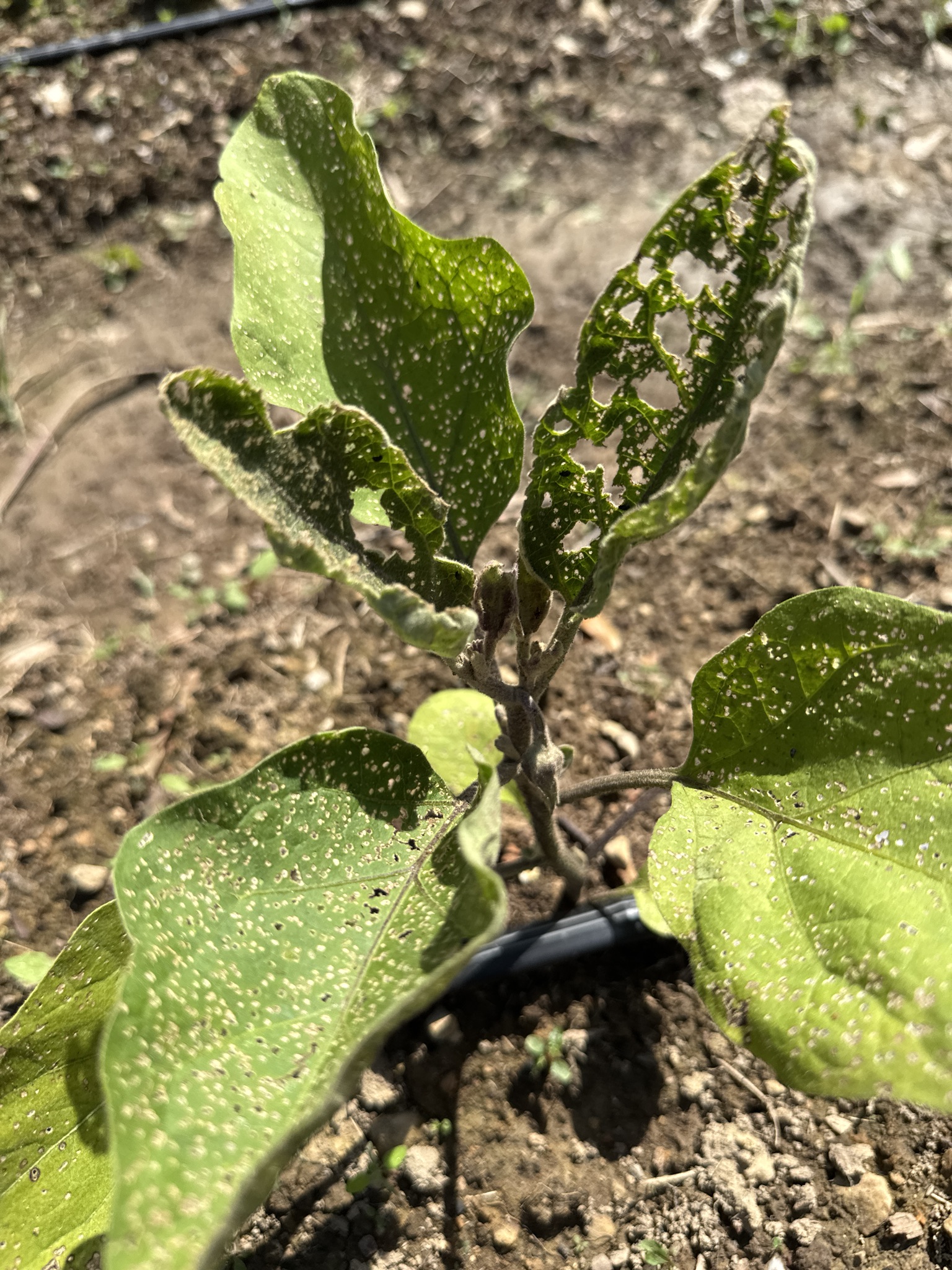
You walk the beds one morning and the eggplant looks like buckshot went through it: tiny round holes across every leaf, the seedlings barely hanging on. Two beds over, the peppers are clean. Same family, same soil, same week in the ground, and the flea beetles have clearly made up their minds.
The bugs have a favorite, and it is not random
Flea beetles and Colorado potato beetles both feed across the nightshade family: eggplant, peppers, potatoes, tomatoes. But set out a full cafeteria line and they do not spread evenly. Eggplant gets hit first and hardest. Peppers, planted right alongside, often stay close to untouched well into the season. This is not luck or where you happened to set the row. It is host preference, and it has been documented for decades. A pest that can eat several crops still ranks them, and it works its way down the list.
For a grower, that is useful information hiding in plain sight. If you know which crop the beetles prefer, you know where the pressure lands first and where to point your attention.
It comes down to leaf chemistry
The reason is on the leaf. Eggplant foliage is tender, thin, and low in the bitter, deterrent compounds that make a leaf unpleasant to chew. Peppers run the other way: capsicum plants carry compounds that many chewing insects avoid, so a beetle that lands on a pepper leaf gets a mouthful it does not much like and moves on. Same insect, same bed, different dinner.
This is why "they are both nightshades" does not tell you what you need to know. Botanical family says how the plants are related; leaf chemistry says what the bug actually wants to eat. The beetle is not reading a plant-family chart. It is tasting, and eggplant tastes better.
Use the favorite as an indicator, and even a trap
Once you accept that eggplant is the preferred crop, you can put it to work.
First, as an indicator. Eggplant tells you the beetles have arrived before your other nightshades show a scratch. If the eggplant is getting chewed, the population is present and building, and it is time to act on everything you care about, not just the eggplant.
Second, as a sacrificial trap. Some growers deliberately plant a few eggplant at the end of a nightshade block to soak up pressure, concentrating the beetles where they can be watched, treated, or simply tolerated while the peppers and tomatoes stay cleaner. You are not saving the eggplant so much as spending it. If eggplant is a minor crop for you and peppers pay the bills, that trade can be worth making on purpose.
Scout it first, protect it early
The practical playbook is simple.
Put the eggplant where you will actually see it, near a path you walk daily, not tucked in a back corner. Early in the season, when seedlings are small and a flea beetle can strip a plant in a couple of days, protect it: row cover over the eggplant right after transplant buys the plants time to outgrow the worst of the damage, since a beat-up mature plant shrugs off holes that would kill a seedling.
Then scout the eggplant first on your walk. It is your early-warning bed. Check the undersides, note how bad it is, and decide from there whether the pressure warrants covering the rest, releasing a treatment, or doing nothing this week.
The honest caveats
This is a tendency, not a law, and it is worth naming the limits.
Preference shifts with the pest. Flea beetles and Colorado potato beetles do not rank crops identically, and a different pest, aphids, hornworms, whiteflies, may prefer your peppers or tomatoes instead. The "eggplant first" rule is specific to the beetles, not a universal one.
Preference also bends under pressure. A light beetle population is picky and stays on the eggplant. A heavy one is hungry, and hungry insects lower their standards: once the eggplant is gone or overrun, they will move to the peppers you thought were safe. High enough numbers erase the difference.
And this is probability, not a guarantee. It tells you where to look first and what to expect most years. It does not promise your peppers a free pass. Weather, timing, nearby host crops, and last year's pressure all move the odds. Treat it as a good default, then let what you actually see on your beds correct it.
How Plots.Farm helps
The hard part is that "eggplant gets it worse than peppers" stays a hunch until you write it down the same way, in the same place, over a season. Memory smooths out exactly the pattern you need.
Plots.Farm's Pest scouts let you record what you found, which bed it was on, and how bad it was, every time you walk. Log flea beetles on the eggplant at severity 4 and nothing on the peppers, week after week, and the per-bed pest heatmap does the rest: the eggplant beds light up while the pepper beds stay cool. The pattern stops being a story you tell and becomes something you can see and point at when you decide where to spend row cover and scouting time next season.
If you are not sure what you are looking at in the first place, the in-app insect identification lets you snap a photo and get back the likely candidates, so a flea beetle does not get logged as something else and throw off the record. Right ID in, useful pattern out.
The next time one nightshade gets stripped and its neighbor stays clean, treat it as a signal, not a mystery. Log it, watch where the pressure concentrates, and put your protection where the bugs actually go.
Create your farm and start scouting your beds one bed at a time.
Pass this to a grower who swears their peppers are just tougher than their eggplant.