 plots
Features · Track
Gallons the crop actually wants
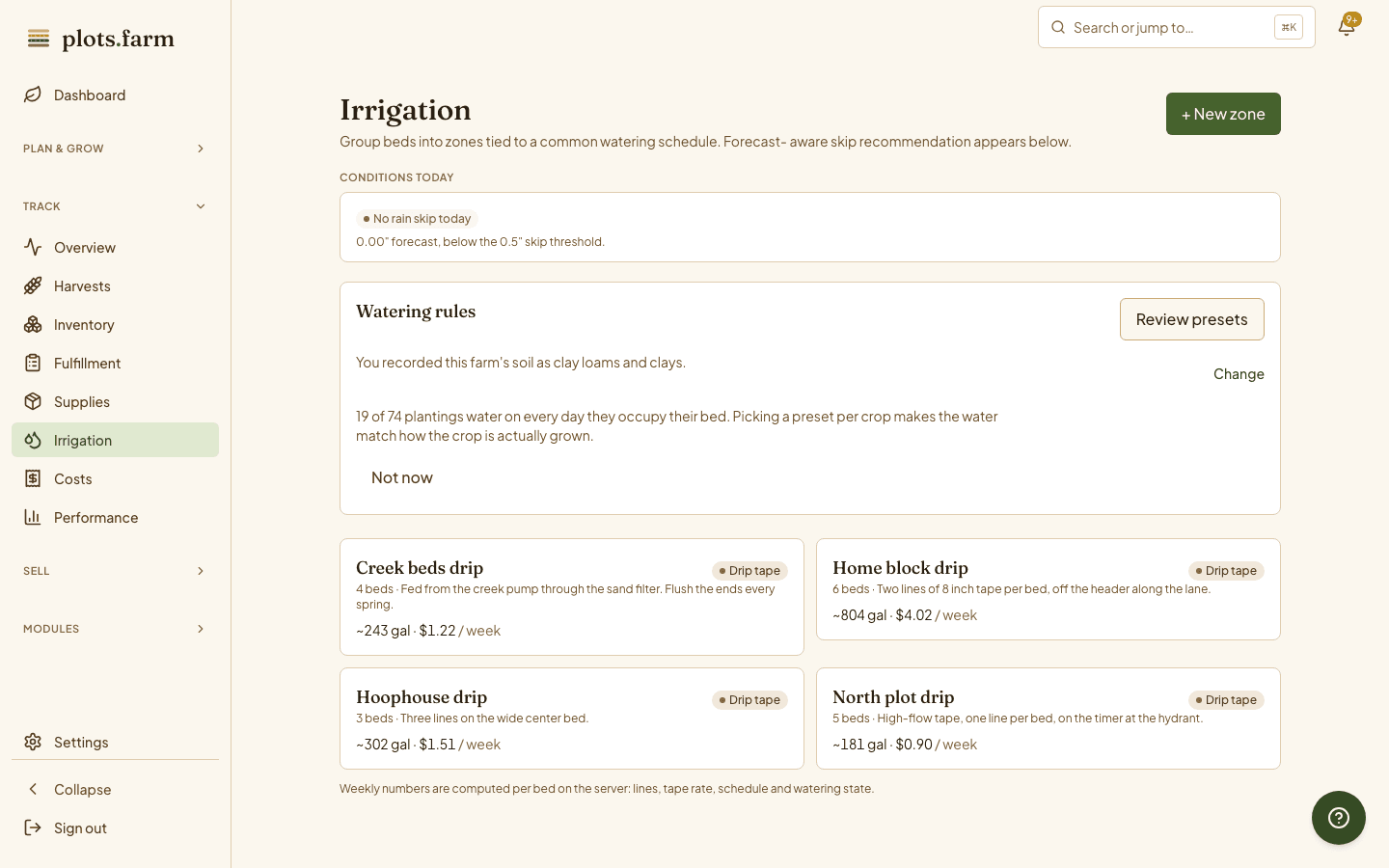
Your weather station measures what a reference crop loses to the air. PlotsFarm turns that into gallons per bed per week for the stage each planting is in, then answers the question no spreadsheet does: how many drip lines, which tape from the ones you own, how many runs a week, and how many minutes each. It books the water cost while it is at it.
Run ceiling
The 45-minute run is too long
Every zone gets a per-run ceiling: past it, water drains below the roots and takes the season's nitrogen with it. A common 45 minute run is often well over. Swap to a slower tape and the schedule recalculates instead of going stale: 137 minutes instead of 104, 32 percent longer, water delivered unchanged at about 233 gallons a week. Every figure names its source in a sentence, your station or a forecast, a published coefficient or your own typed target.
- Ceiling per run, past which water is wasted
- Schedule recalculates when you change tape
- Each number says where it came from
Rain skip
Rain tomorrow. Skip zone 3
When the forecast shows half an inch or more in the next 24 hours, the zone that would have run gets a skip recommendation, zone by zone, not farm wide. Zone 3 under the tomatoes can skip while the new lettuce in zone 1 still gets its light run. The skip is a recommendation on the plan, so you decide whether to turn the valve.
On the phone
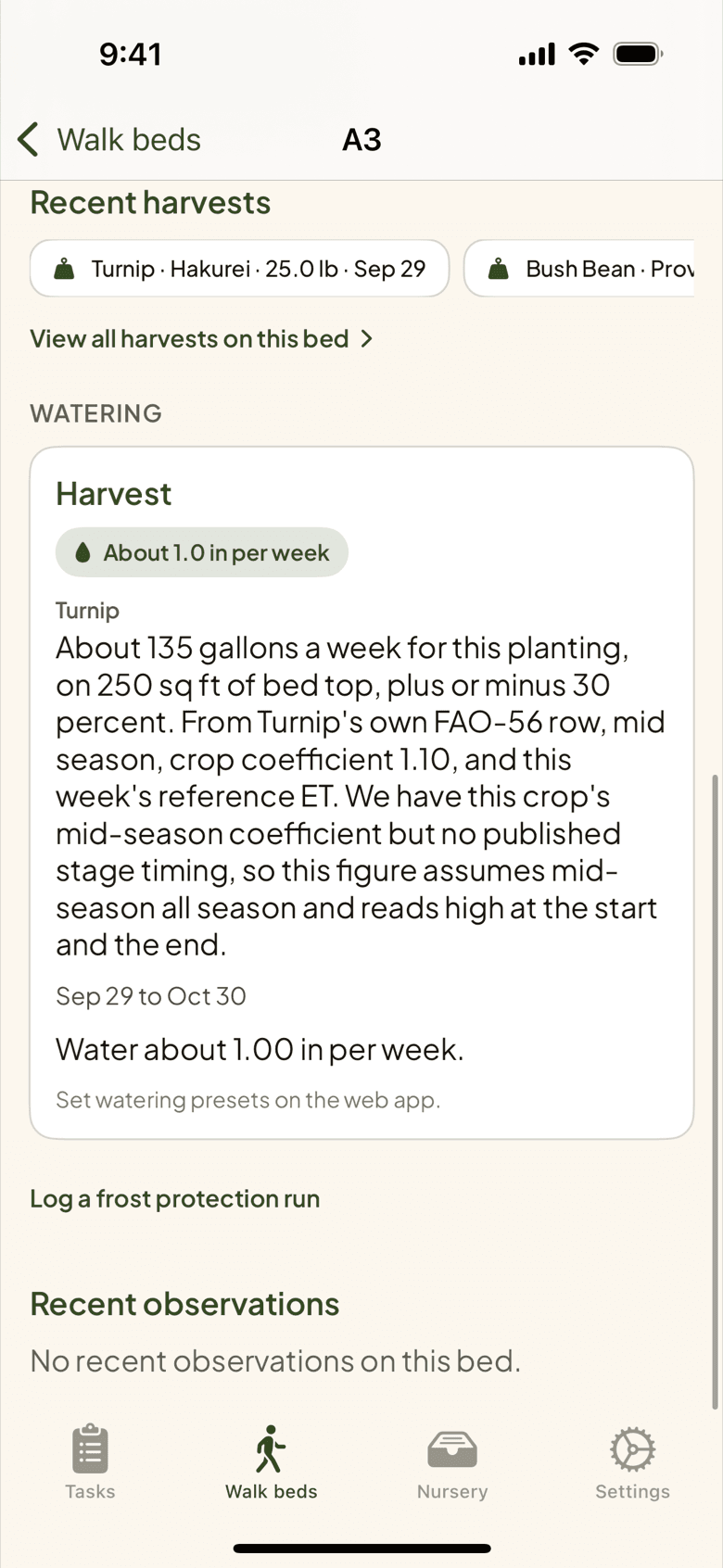
The watering card, at the bed
Open a bed on your phone and the watering card shows what the crop in it needs for its stage right now. On a frost night, log a frost protection run from the same screen with the date and hours; it is kept separate from scheduled watering, so one cold night does not distort the weekly average. Anything finer is set on the web.
Water cost
The water cost nobody records
Set up each zone once: emitter flow, spacing, tapes per bed, runs per week, minutes per run, and your municipal or well rate. Every Monday a job writes a water cost row per bed, tagged as automatic so you can tell it from your own entries, and it never overwrites a manual edit. A well with no rate set says so, with a link, instead of a misleading zero. Water is most growers' second largest variable cost; now it is on the P&L.
In the field
Water the roots, not the path
The plan tells you how many drip lines a bed needs for its row spacing and soil, so the water lands where the roots are. One timer serving a mature tomato and a just-sown salad is reconciled rather than ignored: the app says what the compromise costs each of them and offers a trim it can write for you. Where no published water figure exists, as with a high tunnel, it declines and says why. Nothing is recommended that you would have to go out and buy.
More in irrigation and water
Zones and emitters
Each zone knows its emitter flow, spacing, and the beds it serves.
Drip tape flow units
Pick the tape you own; the plan converts its flow into minutes.
Mulch and trellis
Plastic or organic mulch and a trellis adjust the gallons; the schedule follows.
Frost protection runs
Log a protection run from the phone; it stays apart from scheduled water.
Cost per crop
Water cost per bed rolls up into each planting's P&L.
Rain skip
Half an inch forecast in 24 hours and the zone is told to wait.
Running drip on forty beds and a well? See how market gardeners put the whole platform together.
PlotsFarm for market gardeners →Works with
Pricing
Start on the free tier
Free is a plan, not a trial. Plan the season, work the task list, log harvests, run a CSA and an online store, and take payments, with no subscription and no card. Selling carries a per-transaction fee; the numbers are on the pricing page.