 plots
Features · Track
Your own station, not the airport's
Connect an Ecowitt station and your own readings replace the airport's: temperature, rain, wind, soil, and the evapotranspiration your watering plan runs on. Add Wireless Tag sensors to the same page while that beta is open, see the forecast a week out, and get a frost warning on your phone the night it matters, with the plantings at risk listed on your dashboard.
Wireless Tags
A second sensor brand, no rewiring
Already running Wireless Tag temperature and humidity sensors in the hoophouse? Wireless Tag support is in beta, switched on farm by farm. Once it is on, connect the account in Settings and your tags land on the same Sensors page as your station. Add the ones you want, name where each one sits, hide the rest. Each shows its reading now, when it was last heard from, and its health in plain words: battery low, not heard from since Tuesday. Never a voltage or a signal number.
- Your own OAuth key, encrypted; no password stored
- Reading, last heard, and health per tag
- Same page as the weather station
Forecast
The week before the frost
The dashboard shows today and the next six days with precipitation amounts, and the next frost on the horizon. When a cold-sensitive planting is in the ground ahead of a forecast low, a frost watch banner names it a week out, not the night before. Forecasts come from NOAA in the United States and Open-Meteo elsewhere, with your frost dates driving the planning calendar underneath.
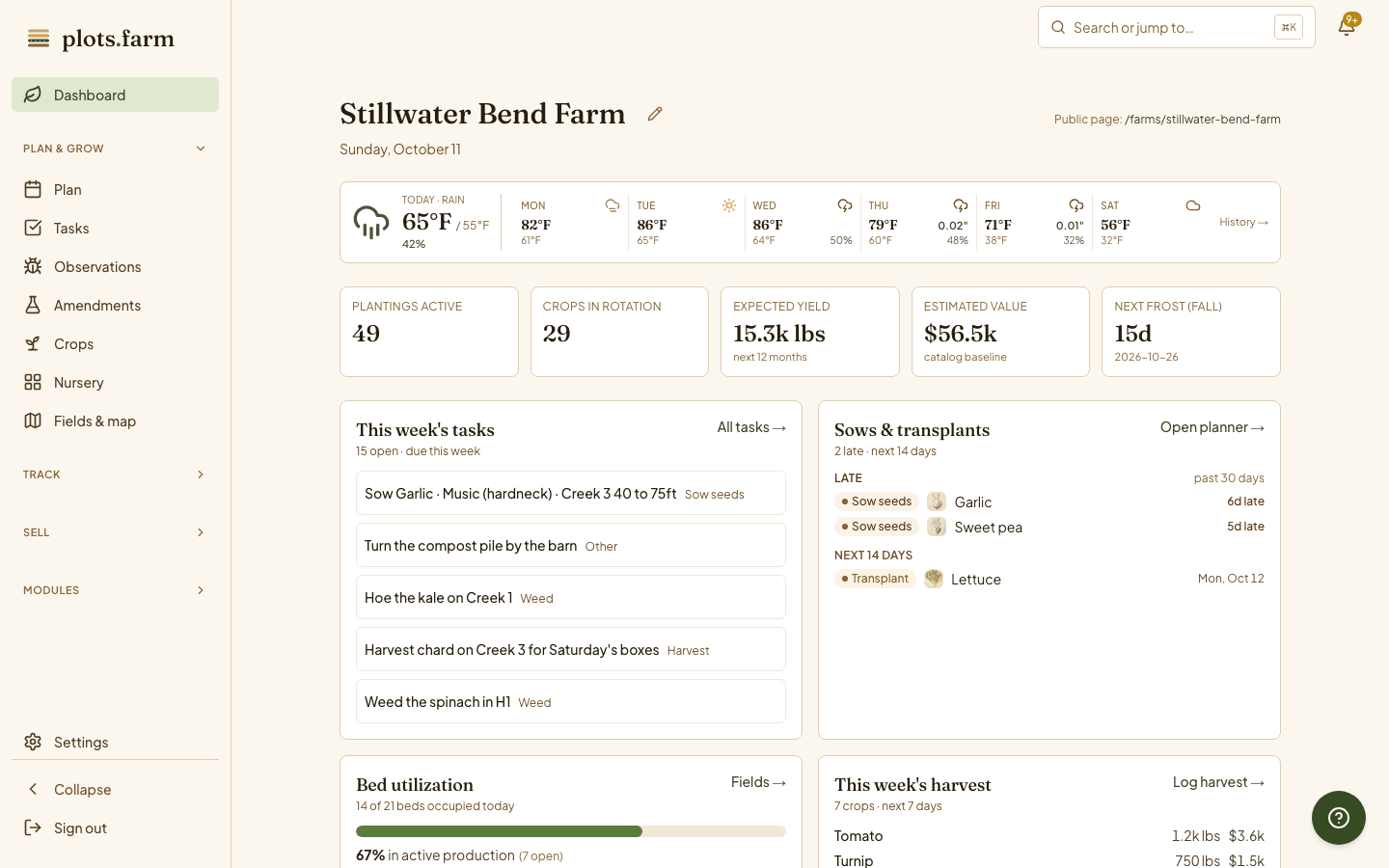
The weather window
Frost tonight: pick these first
The night the forecast drops below your frost class, the dashboard turns the warning into a list: the Sungold in Bed 8, the basil in Bed 3, the peppers under no cover. You decide which to pick this afternoon and which to cover, and the plan health rules account for a cover once it is on the bed. The list is built from what is actually in your beds, not from a generic planting calendar.
On the phone
Frost tonight, covered from the bed
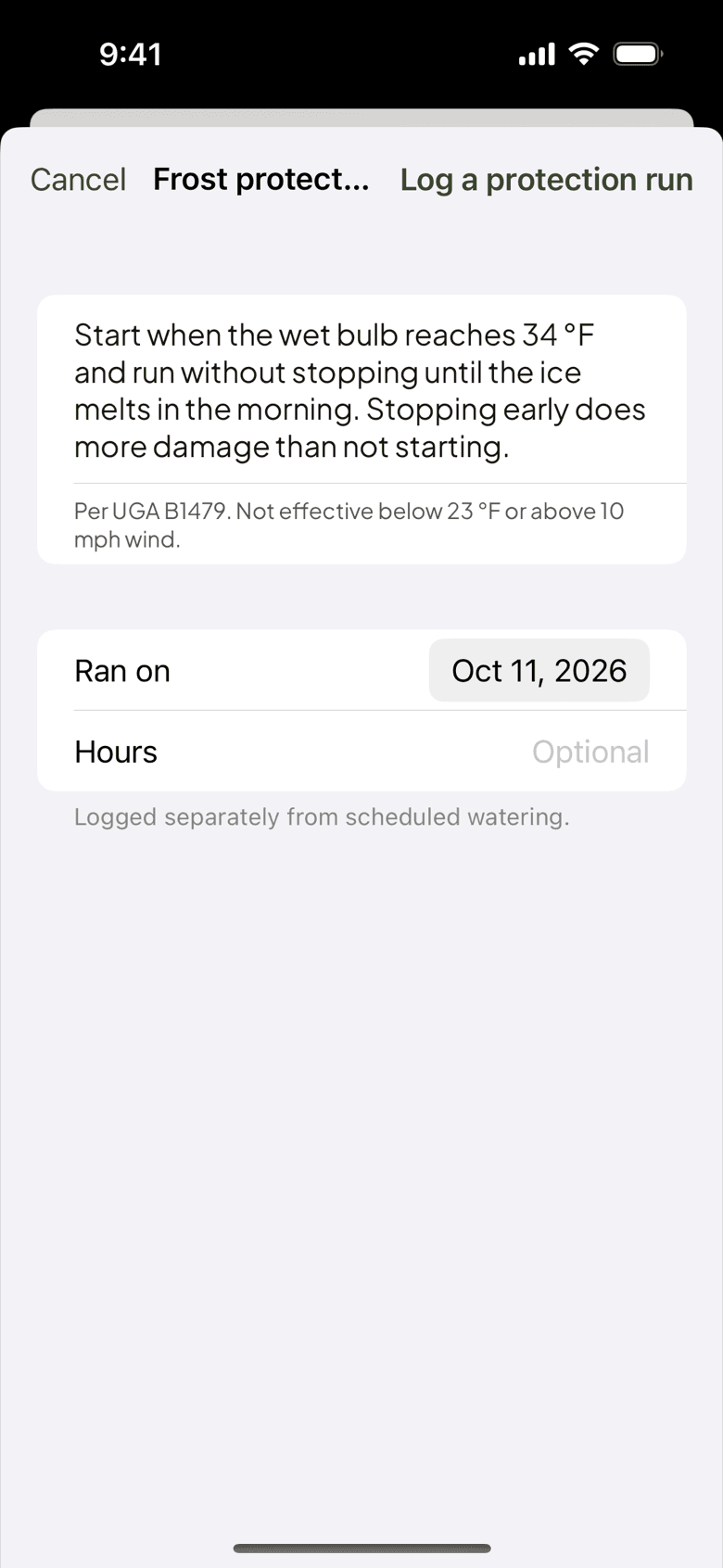
The frost watch push arrives on your phone and your Apple Watch the evening a frost is forecast for a planting at risk. Walk to Bed 3 and pull the row cover. If you run water for frost, log the run from the bed's watering card on the phone, with the date and hours, kept apart from the week's watering. Record the cover on the bed from the web and the plan health rules stop warning about that planting.
- Frost watch push on iPhone and Apple Watch
- Frost protection runs logged from the bed
History
Station readings and history
The weather history page keeps daily and monthly aggregates with year-over-year comparison, so whether this July ran hotter than last July answers itself. A new farm gets 365 days of history backfilled on the first fetch, and a daily job adds each day's snapshot after that. The same records feed the watering plan and the degree-day view, so the numbers you irrigate by are the numbers you look back on.
More in weather and sensors
Six-tile station row
Temperature, humidity, rain, wind, soil, and solar on one line.
Rain gauge warning
A plain-words flag when the gauge stops reporting or looks clogged.
Soil readings
Soil temperature from a probe placed at the bed.
Frost watch push
Cold-sensitive plantings named on your phone the night it matters.
GDD
Growing degree days from your own station, not the airport's.
Weather provider by country
NOAA in the United States, Open-Meteo elsewhere, chosen for you.
Protecting a share week from a late frost? See how CSA farms put the whole platform together.
PlotsFarm for csa farms →Works with
Pricing
Start on the free tier
Free is a plan, not a trial. Plan the season, work the task list, log harvests, run a CSA and an online store, and take payments, with no subscription and no card. Selling carries a per-transaction fee; the numbers are on the pricing page.